
Easy Tres Leches Cake Recipe (Make-Ahead, No Mixer Needed for the Soak)
My husband doesn’t ask me to make specific desserts very often. He’s generally happy with whatever I put in front of him. But tres leches? That’s the one he asks for by name. He grew up eating it at family gatherings — his Puerto Rican family made it for birthdays, holidays, any occasion that called for something special — and it’s the dessert that still takes him straight back to those tables.
The first time I made it I was nervous. It’s not complicated, but it has a specific texture that either works or it doesn’t — the sponge has to be light enough to absorb the milk mixture without turning to mush, and the soak has to have enough time to fully penetrate the cake before you serve it. Once you understand those two things, you’ve got it.
This version uses a butter-based sponge, which is slightly richer than the traditional oil-based or separated-egg approach, and a classic three-milk soak: sweetened condensed milk, evaporated milk, and whole milk. It needs at least 4 hours in the refrigerator — overnight is better. Plan accordingly and you’ll pull out a cake that looks and tastes like it took all day.
What You’re Making
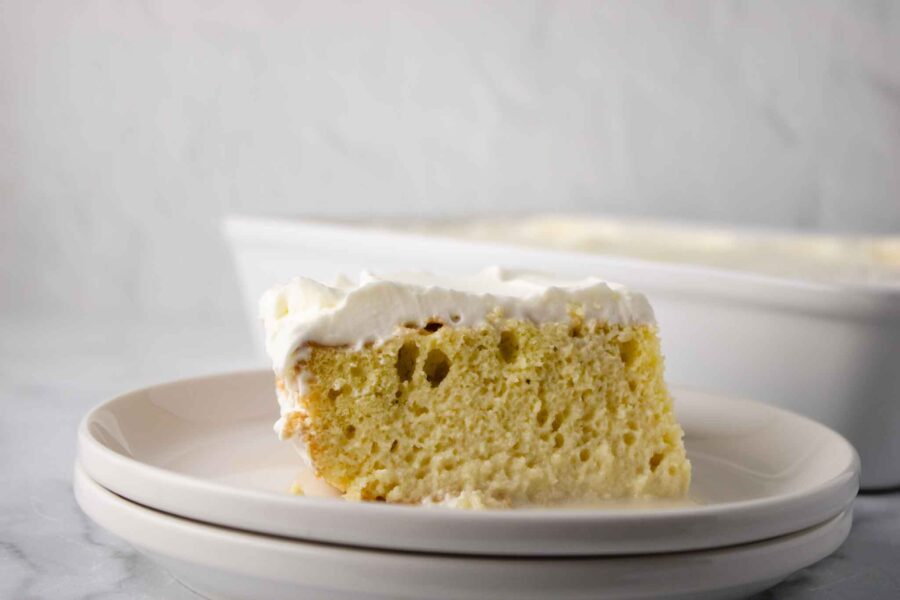
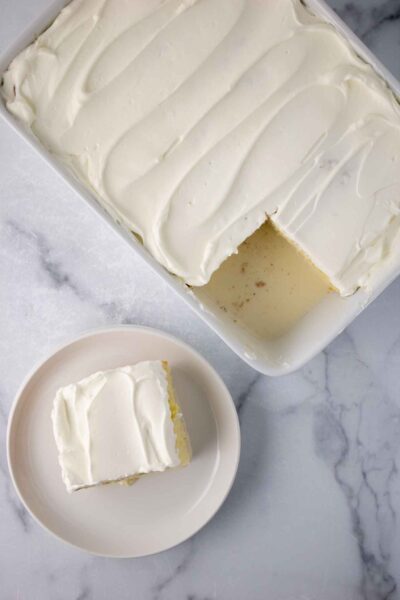
A butter sponge cake baked in a 9×13 pan, pierced all over, and soaked with a mixture of three milks — sweetened condensed, evaporated, and whole milk — while still warm. The cake chills in the milk soak for at least 4 hours (preferably overnight) until fully absorbed. Before serving it’s topped with lightly sweetened whipped cream. Serves 10.
Ingredients
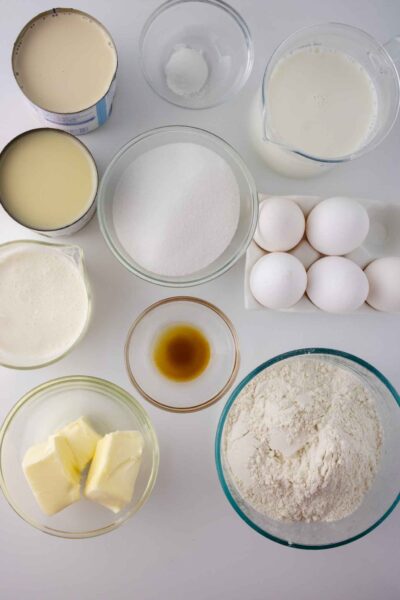
- All-purpose flour
- Baking powder
- Unsalted butter
- White sugar
- Eggs
- Vanilla extract
- Whole milk
- Sweetened condensed milk
- Evaporated milk
- Heavy whipping cream
Ingredient Notes
All-purpose flour (1½ cups): Standard AP flour works well here. Sift it with the baking powder — tres leches sponge needs an even, airy crumb to absorb the milk without becoming dense.
Baking powder (1 tsp): The only leavener. Make sure it’s fresh — baking powder older than 6 months loses potency. Test it by dropping a teaspoon into hot water; it should bubble actively.
Unsalted butter (½ cup / 1 stick), room temperature: Creamed with the sugar to create the cake’s structure. Must be truly room temperature — not melted, not cold. If you can press your finger into it easily, it’s ready.
White sugar (1 cup) — for the cake: Creamed with the butter until light and fluffy. This aerates the batter and is part of what gives the sponge its lift.
Eggs (5 large): Five whole eggs added one at a time. The higher egg count is what gives this sponge enough structure to hold the milk soak without dissolving. Don’t reduce the eggs.
Vanilla extract (½ tsp) — for the cake: A small amount; the milk soak carries most of the flavor. Use real extract.
Whole milk (2 cups) — for the soak: Part of the three-milk mixture. Whole milk only — lower fat milk will make the soak thinner and less rich.
Sweetened condensed milk (1 can, 14 oz) — for the soak: The sweetest and thickest of the three milks. This is what makes tres leches distinctively sweet and rich. Do not substitute evaporated milk for this — they are different products.
Evaporated milk (1 can, 12 oz) — for the soak: Unsweetened, concentrated milk. Adds depth and creaminess without more sweetness. Again, not interchangeable with condensed milk.
Heavy whipping cream (1½ cups) — for the topping: Must be cold to whip properly. Keep it in the refrigerator until the moment you start whipping.
White sugar (2–3 tbsp) — for the whipped cream: The original recipe calls for 1 cup of sugar in the whipped cream. That is too much — granulated sugar in that quantity won’t fully dissolve and the topping will be grainy and cloyingly sweet. Use 2–3 tbsp of powdered sugar instead for a smooth, lightly sweetened whipped cream that lets the milk-soaked cake shine.
Vanilla extract (1 tsp) — for the whipped cream: Adds a warm note to the topping. Good here because the whipped cream is the last flavor you taste.
Step-by-Step Walkthrough
Step 1: Preheat and prep. Preheat oven to 350°F. Grease a 9×13-inch baking pan and line the bottom with parchment paper, then grease the parchment. This double-insurance prevents sticking on a cake that will be served straight from the pan.
Step 2: Sift the dry ingredients. Sift together 1½ cups flour and 1 tsp baking powder. Set aside.
Step 3: Cream butter and sugar. In a large bowl, beat ½ cup room-temperature butter and 1 cup sugar with an electric mixer on medium-high speed for 3–4 minutes until pale, light, and noticeably fluffy. Don’t rush this step — proper creaming is what gives the sponge its structure.
Step 4: Add eggs and vanilla. Add 5 eggs one at a time, beating well after each addition. Add ½ tsp vanilla. The batter may look slightly curdled at this point — that’s normal. It will come together when the flour goes in.
Step 5: Fold in the flour. Add the flour mixture in three additions, mixing on low speed just until combined after each. Don’t overmix — stop as soon as you see no more dry streaks. Overmixing develops gluten and makes a tough sponge that won’t absorb the milk properly.
Step 6: Bake. Pour batter into the prepared pan and smooth the top. Bake at 350°F for 28–32 minutes, until a toothpick inserted into the center comes out clean and the top is golden. The cake should spring back when lightly pressed.
Step 7: Pierce the cake while warm. Remove from the oven and let cool for 10 minutes — not fully, just until it’s warm rather than steaming. Use a fork to poke holes all over the surface, going deep. More holes = better soak penetration. Don’t be shy here.
Step 8: Make the milk soak. Whisk together 2 cups whole milk, 1 can sweetened condensed milk, and 1 can evaporated milk until fully combined.
Step 9: Soak the cake. Pour about half the milk mixture evenly over the warm pierced cake. Let it absorb for a few minutes, then pour on the remaining mixture gradually. You may not need every last drop — the cake should be well saturated but not swimming. The soak will pool at first and absorb as it sits.
Step 10: Refrigerate. Cover the pan tightly with plastic wrap and refrigerate for at least 4 hours. Overnight is strongly preferred and produces a noticeably better result — the milk fully penetrates the crumb and the flavors meld. Do not serve this after 15–20 minutes. It will not be ready.
Step 11: Make the whipped cream. Just before serving, beat 1½ cups cold heavy cream with 2–3 tbsp powdered sugar and 1 tsp vanilla in a chilled bowl on medium-high speed until soft to medium peaks form. It should hold its shape but still look billowy, not stiff.
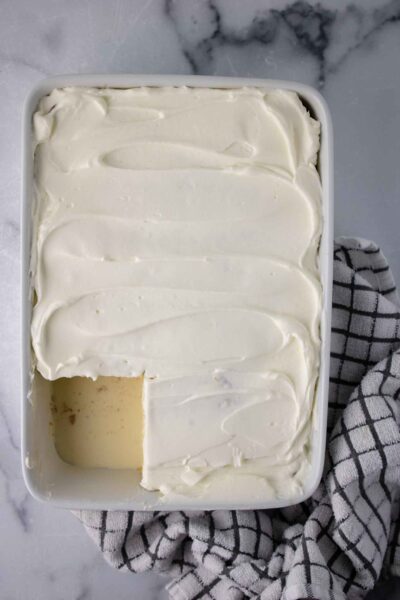
Step 12: Top and serve. Spread whipped cream over the chilled cake. Garnish with a dusting of cinnamon, fresh berries, or sliced strawberries. Slice into squares and serve cold directly from the pan.
Frequently Asked Questions
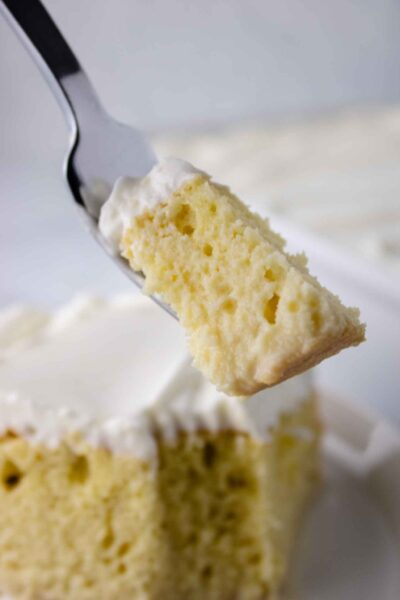
Soggy usually means one of three things: the cake wasn’t given enough time to absorb (4 hours minimum, overnight is better), too much soak was poured on at once without letting it absorb in stages, or the sponge wasn’t airy enough to hold the liquid. A dense, overmixed cake turns to mush. Pour the soak gradually and give it time.
Yes — it’s actually designed to be made ahead. Bake, soak, and refrigerate up to 24 hours before serving. Add the whipped cream topping right before serving, not before. The cake keeps well for up to 5 days refrigerated.
The three-milk combination is what defines the dessert. That said, in a pinch: if you’re out of evaporated milk, substitute an equal amount of half-and-half. If you’re out of whole milk, use 2% — the soak will be slightly thinner. Don’t skip the sweetened condensed milk — it provides the sweetness and body the other two milks can’t replicate.
A toothpick inserted in the center should come out clean with no wet batter. The top should be golden and spring back when you press it lightly with a finger. If it leaves an indent, it needs more time. Start checking at 28 minutes.
You can, but the texture won’t be as good. Box cake is denser and moister than a scratch sponge, which means it absorbs less of the milk soak and can get gummy. If you go that route, use a white or yellow cake mix, bake as directed, pierce while warm, and reduce the soak to about 2½ cups total.
Granulated sugar doesn’t fully dissolve in whipped cream. Use powdered (confectioners’) sugar instead — 2 to 3 tablespoons is enough for 1½ cups of cream. The result will be smooth and stable.
Up to 5 days covered tightly. The cake actually improves from day 1 to day 2 as the soak continues to distribute. By day 4–5 the whipped cream may begin to weep slightly — you can blot it with a paper towel or simply re-spread before serving.
Tips
This cake is better the next day. The soak continues to distribute overnight and the flavors deepen. If you can resist cutting into it for a full 24 hours, you’ll be rewarded.
Plan ahead — this cake needs time. The milk soak needs a minimum of 4 hours, but overnight is where this cake really earns its reputation. If you’re making it for an event, bake and soak it the night before. The whipped cream goes on right before serving.
Pierce deeply and generously. The holes are how the milk gets in. Use a fork, a skewer, or even a chopstick, and go all the way to the bottom. The more surface area you create, the better the soak.
Pour the soak while the cake is still warm. A warm cake absorbs liquid faster and more evenly than a fully cooled one. Don’t wait until it’s at room temperature.
Don’t use all the soak if the cake looks saturated. Every cake and pan is slightly different. Pour it gradually and stop when the cake is thoroughly soaked but not pooling liquid. You can always pour on more after 30 minutes if the cake has absorbed the first round.
Use powdered sugar in the whipped cream, not granulated. Granulated sugar doesn’t fully dissolve in whipped cream and leaves a gritty texture. Powdered sugar incorporates smoothly and keeps the topping light.
Keep everything cold. The bowl, the beaters, and the cream should all be cold before you whip. Warm cream won’t whip to peaks — it will just slosh around. Ten minutes in the freezer for the bowl works well.

Variations
Coconut Tres Leches: Replace the whole milk in the soak with full-fat coconut milk. Add ½ tsp coconut extract to the whipped cream. Finish with toasted shredded coconut on top. A natural direction given the Caribbean roots of this dessert.
Strawberry Tres Leches: Spread a layer of macerated fresh strawberries (sliced + 2 tbsp sugar, left for 30 minutes) between the whipped cream and the top of the cake. The berry juice seeps into the cream slightly and adds a fresh contrast to the rich soak.
Chocolate Tres Leches: Add ¼ cup Dutch process cocoa powder to the flour before sifting. Add 1 tbsp chocolate syrup to the milk soak. Top with whipped cream and chocolate shavings.
Dulce de Leche Tres Leches: Swap the sweetened condensed milk in the soak for an equal amount of dulce de leche, warmed slightly so it combines with the other milks. The caramel depth is a significant upgrade. Drizzle extra dulce de leche over the whipped cream before serving.
Individual Tres Leches Cups: Bake the sponge in a 9×13, cut into squares, and place each square in a individual serving cup or mason jar. Pour soak directly into each cup. Top with whipped cream per serving. Great for parties — no slicing required and each person gets a perfectly soaked portion.
Spiced Tres Leches: Add ½ tsp cinnamon and ¼ tsp nutmeg to the cake batter. Add a pinch of cinnamon to the milk soak. Dust the finished whipped cream topping with cinnamon before serving. Warm spice notes work especially well in fall and winter.
Tips for Making This Recipe with Kids
Mixing Ingredients: Let children help with measuring and mixing the dry ingredients. Supervise them as they use an electric mixer on medium speed to blend the batter to the right consistency.
Poking the Cake: Kids often delight in the task of poking holes on the top of the cake, preparing it for the milk soak. Provide them with a fork or skewer for this fun step.
Decorating: Allow them to spread the whipped cream over the cooled cake and decorate with fresh fruit or a sprinkle of cinnamon, enhancing their creative skills.
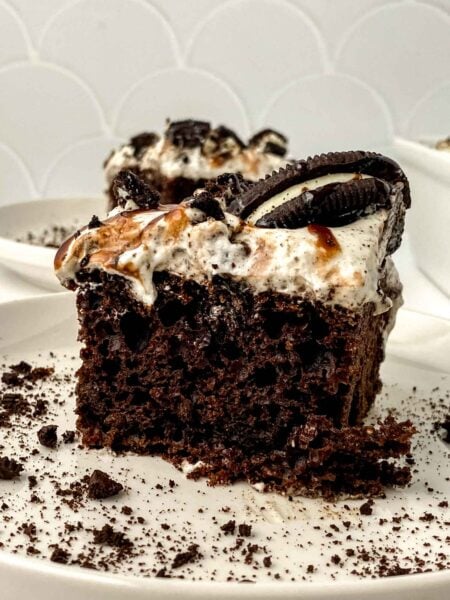
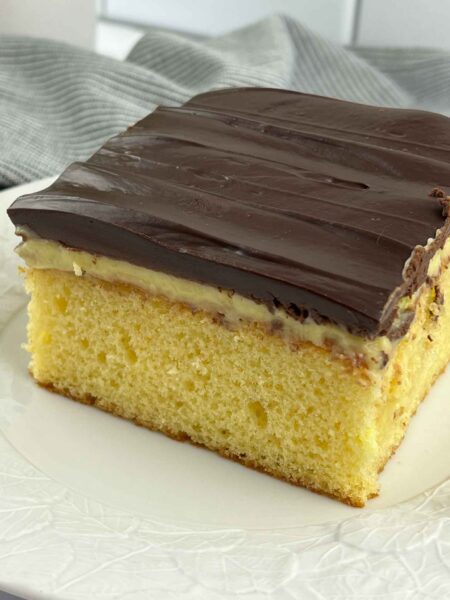
This is one of those cakes that earns trust over time — the more you make it, the more you understand how the soak works and what the right texture feels like when you cut into it. My husband has strong opinions about whether it’s right, which means I’ve had plenty of feedback over the years. If you want to keep going with make-ahead cakes that are actually better the next day, the Boston Cream Poke Cake works on the same principle. And the Easy Oreo Poke Cake is the one to make when you need something fast that still looks impressive.
What are some other amazing cake recipes to try?
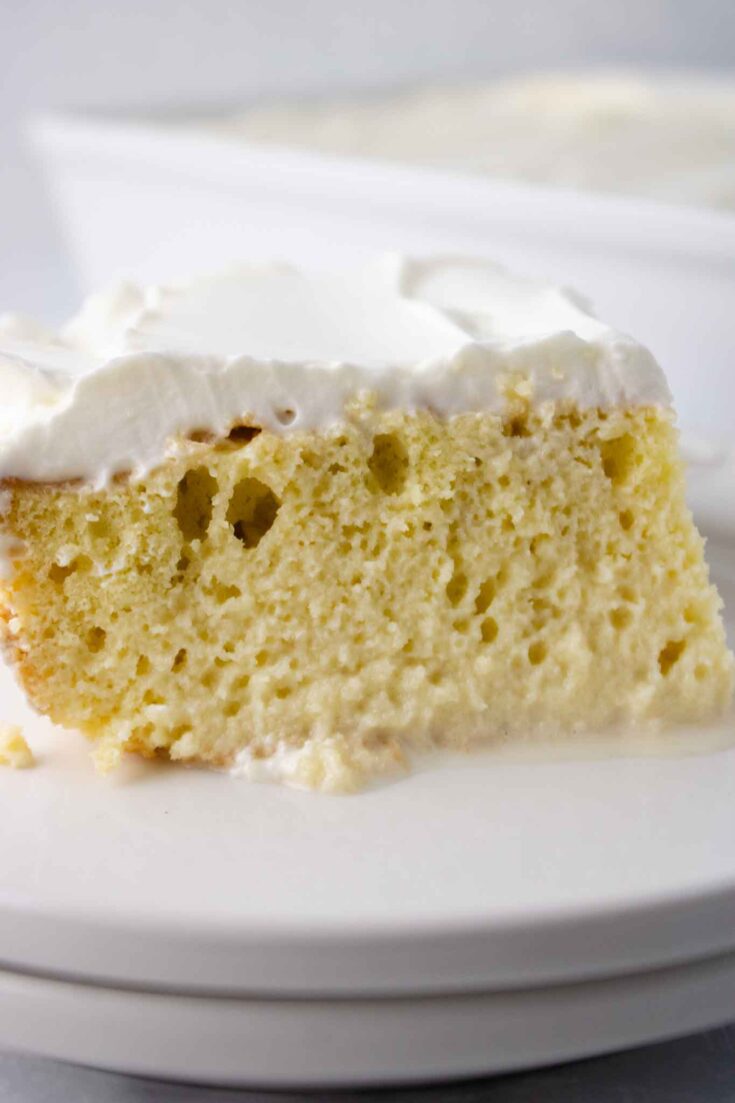
Easy Tres Leches Cake
The Tres Leches Cake is a moist and airy delight, soaked in a rich blend of three milks and topped with fluffy whipped cream. It's a perfect blend of sweetness and texture, embodying the essence of Latin American dessert traditions.
Ingredients
- Cake
- 1½ cups all-purpose flour
- 1 tsp baking powder
- ½ cup unsalted butter, room temperature
- 1 cup white sugar
- 5 large eggs, room temperature
- ½ tsp vanilla extract
- Three-Milk Soak
- 2 cups whole milk
- 1 can (14 oz) sweetened condensed milk
- 1 can (12 oz) evaporated milk
- Whipped Cream Topping
- 1½ cups heavy whipping cream, cold
- 2–3 tbsp powdered sugar
- 1 tsp vanilla extract
- Optional Garnish
- Ground cinnamon, for dusting
- Fresh strawberries or sliced fruit
Instructions
- Preheat oven to 350°F. Grease a 9x13-inch baking pan and line the bottom with parchment paper, then grease the parchment.
- Sift together flour and baking powder. Set aside.
- Beat butter and sugar together with an electric mixer on medium-high speed for 3–4 minutes until pale, light, and fluffy. Do not rush this step — proper creaming gives the sponge its lift.
- Add eggs one at a time, beating well after each addition. Add vanilla and mix to combine. The batter may look slightly curdled at this point — that is normal.
- Add the flour mixture in three additions, mixing on low speed just until combined after each. Stop as soon as no dry streaks remain. Do not overmix — a tough sponge will not absorb the milk soak properly.
- Pour batter into the prepared pan and smooth the top. Bake at 350°F for 28–32 minutes, until a toothpick inserted in the center comes out clean and the top springs back when lightly pressed. Start checking at 28 minutes.
- Remove from oven and let cool for 10 minutes — the cake should still be warm, not fully cooled. Use a fork or skewer to poke holes all over the surface, going all the way to the bottom. More holes means better soak penetration.
- Whisk together the whole milk, sweetened condensed milk, and evaporated milk until fully combined.
- Pour about half the milk soak evenly over the warm cake. Let it absorb for 5 minutes, then pour the remaining soak gradually, stopping when the cake is thoroughly saturated but not pooling liquid. You may not need every last drop.
- Cover the pan tightly with plastic wrap and refrigerate for at least 4 hours. Overnight is strongly preferred — the milk fully penetrates the crumb and the flavors meld significantly with more time.
- Just before serving, beat cold heavy cream, powdered sugar, and vanilla in a chilled bowl on medium-high speed until soft to medium peaks form. The topping should be billowy and hold its shape without looking stiff.
- Spread whipped cream over the chilled cake. Dust with cinnamon and top with fresh fruit if desired. Slice into squares and serve cold directly from the pan.
Notes
Nutrition Information
Yield
10Serving Size
1Amount Per Serving Calories 540Total Fat 28gSaturated Fat 17gUnsaturated Fat 11gCholesterol 171mgSodium 137mgCarbohydrates 60gFiber 1gSugar 31gProtein 10g
Before you go, Grab Your Free Printable Recipe Kit!
Keep track of all your favorite recipes and ingredients with this free printable book!

Hi! I’m Nellie. I am an entrepreneur, a busy mama of 3 and a wife to my high school sweetheart. I have been sharing content for over 12 years about how to cook easy recipes, workout tips and free printables that make life a little bit easier. I have been featured in places like Yahoo, Buzzfeed, What To Expect, Mediavine, Niche Pursuits, HuffPost, BabyCenter, Mom 2.0, Mommy Nearest, Parade, Care.com, and more!
Get comfortable and be sure to come hang out with me on social. Don’t forget to grab your free fitness journal before you go!
