
Mardi Gras King Cake Recipe
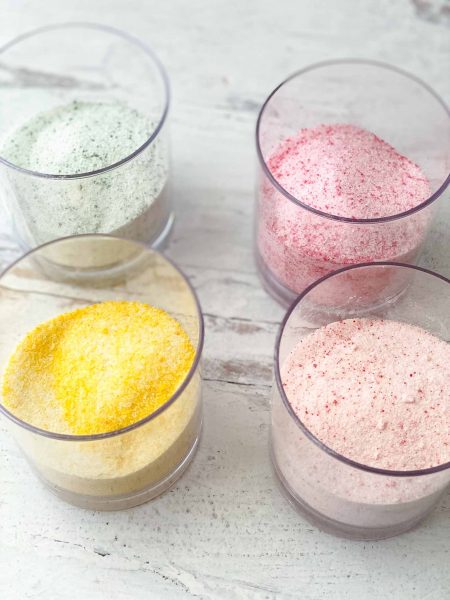
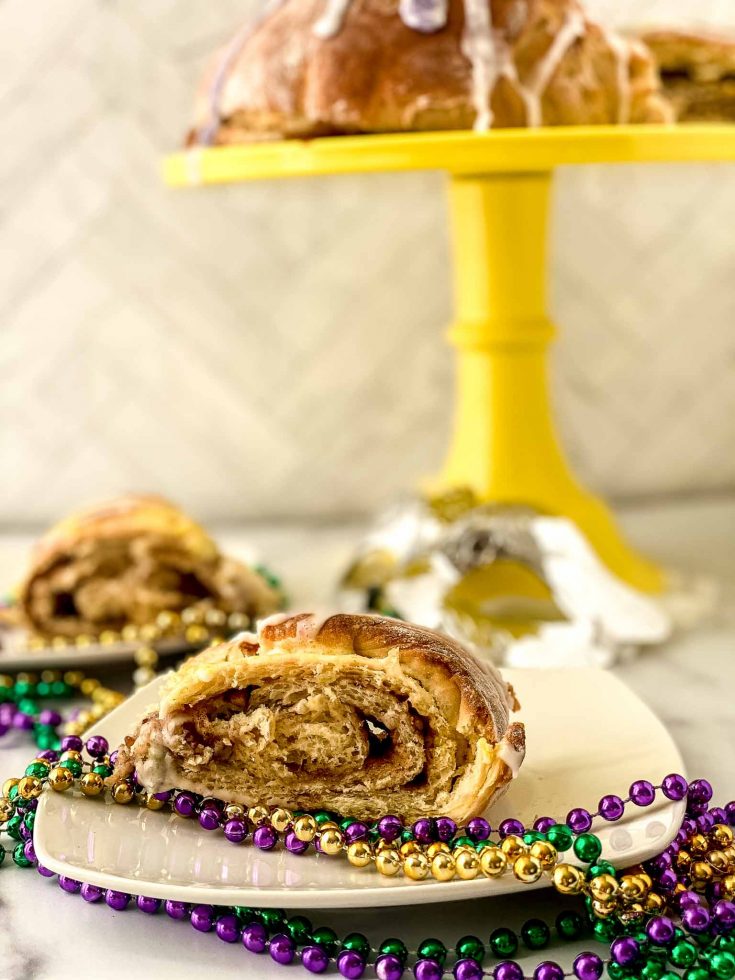
This amazing Mardi Gras King Cake is full of flavor and perfect for Fat Tuesday and other Mardi Gras celebrations! Decorated with green, purple and gold sugars, you will love it!
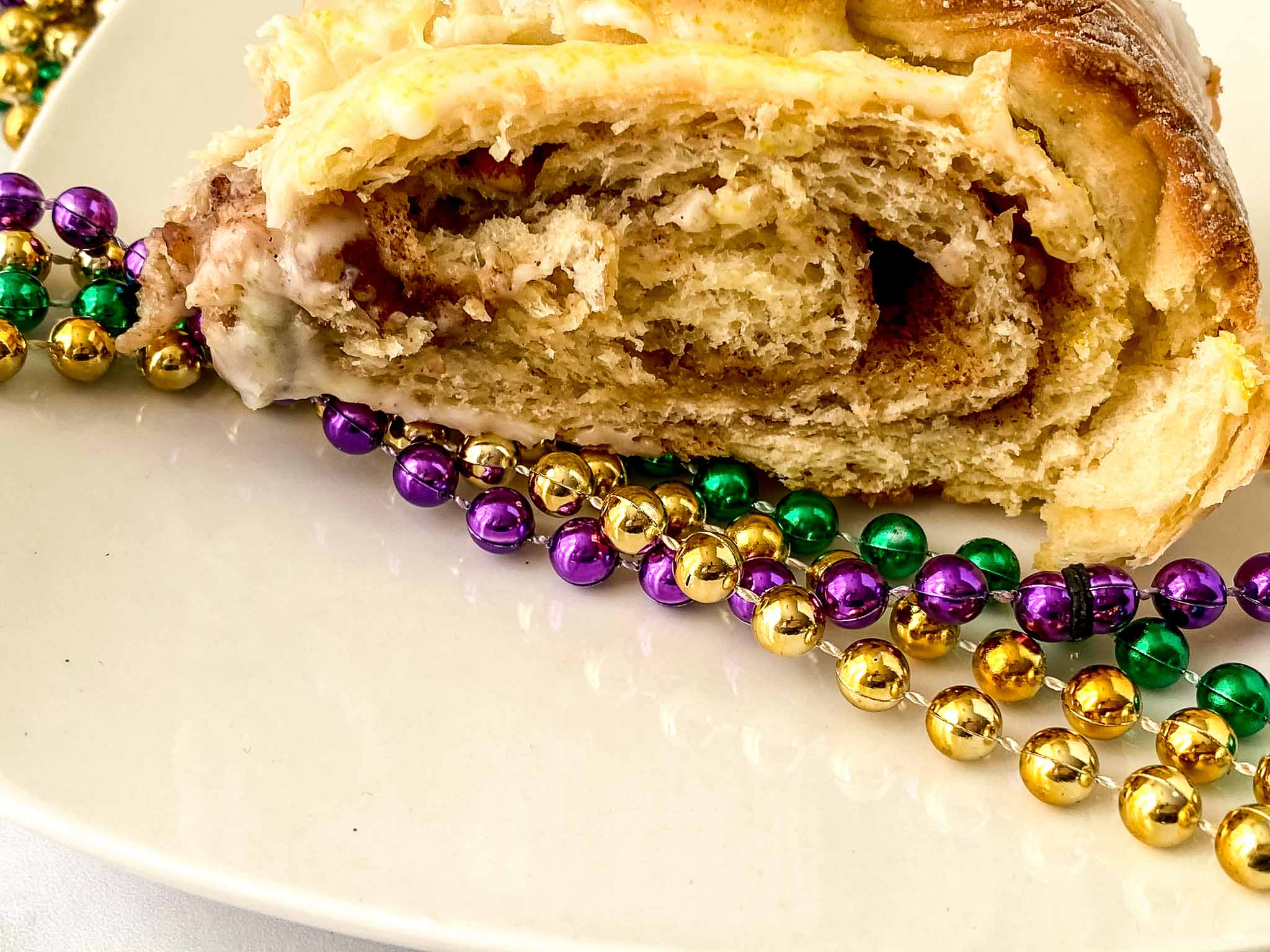
You all know that I am a life long New Yorker and am proud of it. However, I have been researching recipes from all over the country and even internationally since it seems like my full time job is cooking these days.
I have always heard about beignets and King Cake especially around my birthday because it was Mardi Gras time. Although I have never officially attended a Mardi Gras, It is SO on my bucket list!
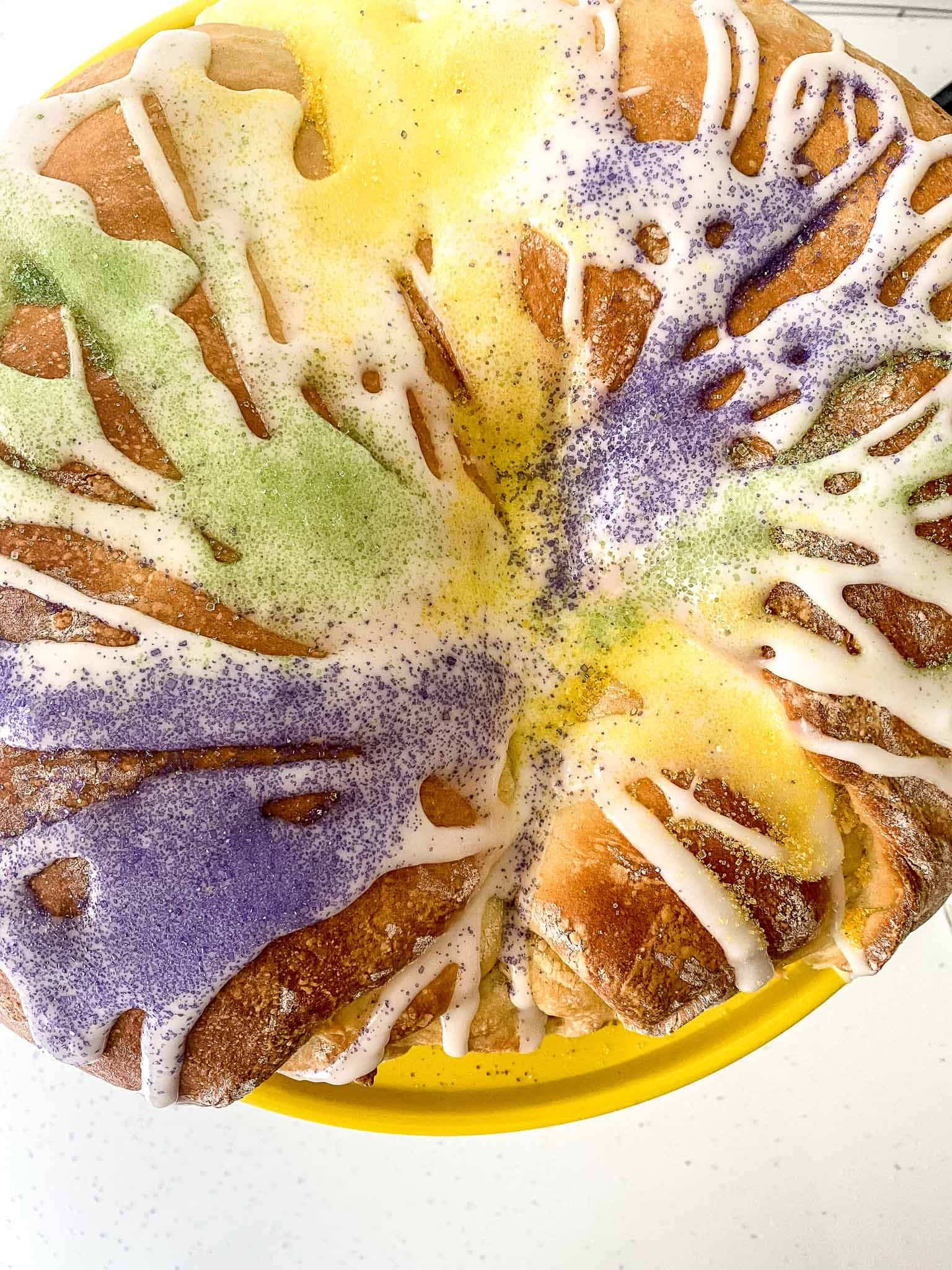
What ingredients are in this Mardi Gras King Cake?
For the dough:
1 cup warm milk
1 packet instant rise yeast
1⁄4 cup melted butter
1⁄4 cup granulated sugar + 1tbsp separated
2 large eggs
1⁄2 tsp salt
4 cup all purpose flour
2 tsp olive oil
For the filling:
2/3 cup brown sugar
2 teaspoon cinnamon
6 tablespoons softened unsalted butter
1⁄2 cup chopped pecans
For the icing:
1.5 cup powdered sugar
1.5 tablespoons milk
1⁄2 tsp vanilla
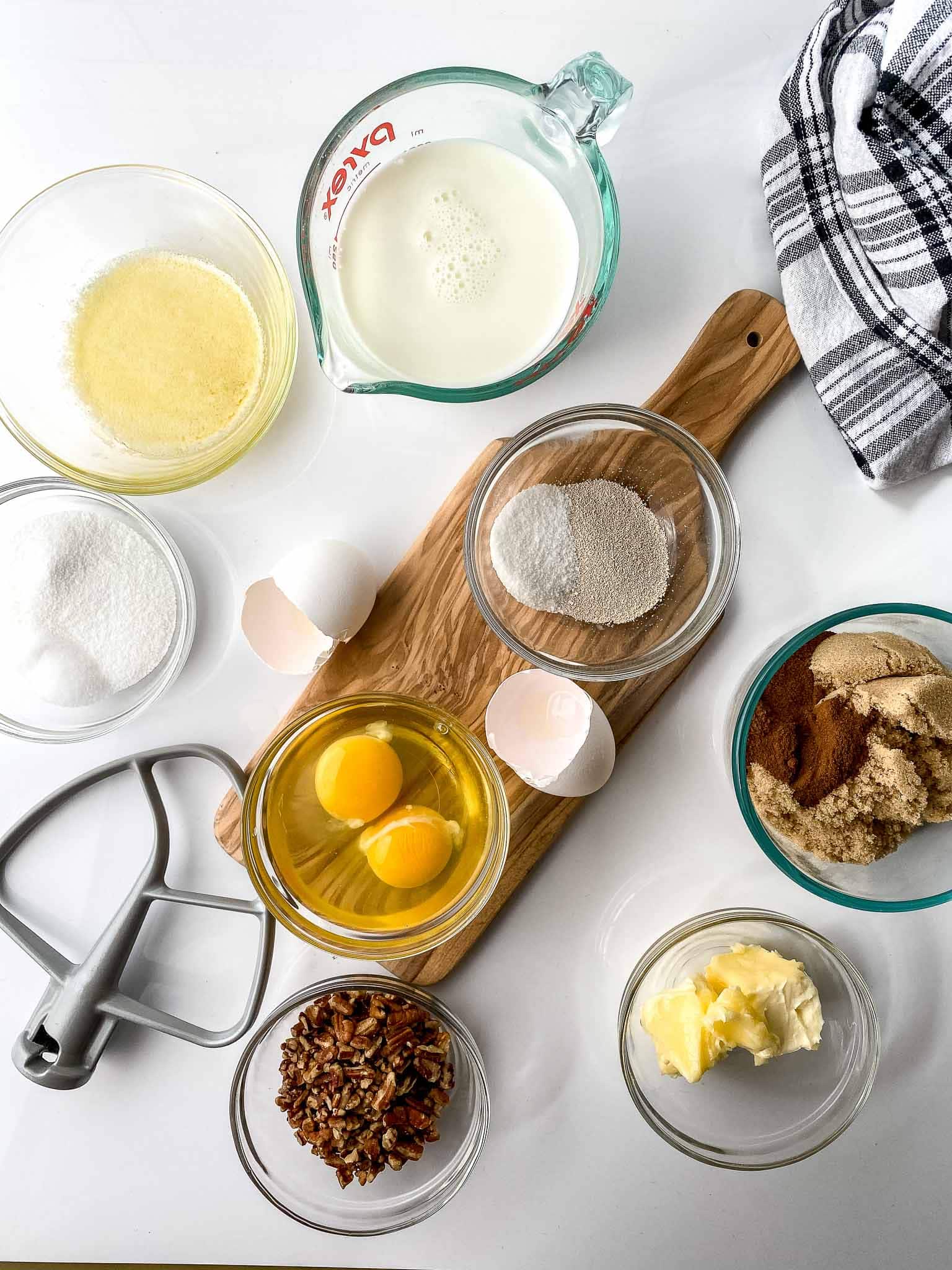
What exactly is a King Cake anyway?
It’s a brioche or sweet roll dough that is is braided, baked in a circle and decorated with yummy icing and purple, green and gold sugars. Similar to a cinnamon roll, but way more dressed up and fancy!
“The King Cake is a New Orleans tradition that involves a pastry, a small plastic baby, and a party. The King Cake is baked with a small plastic baby hidden inside, the person who gets the slice with baby in it has to host the next party.”
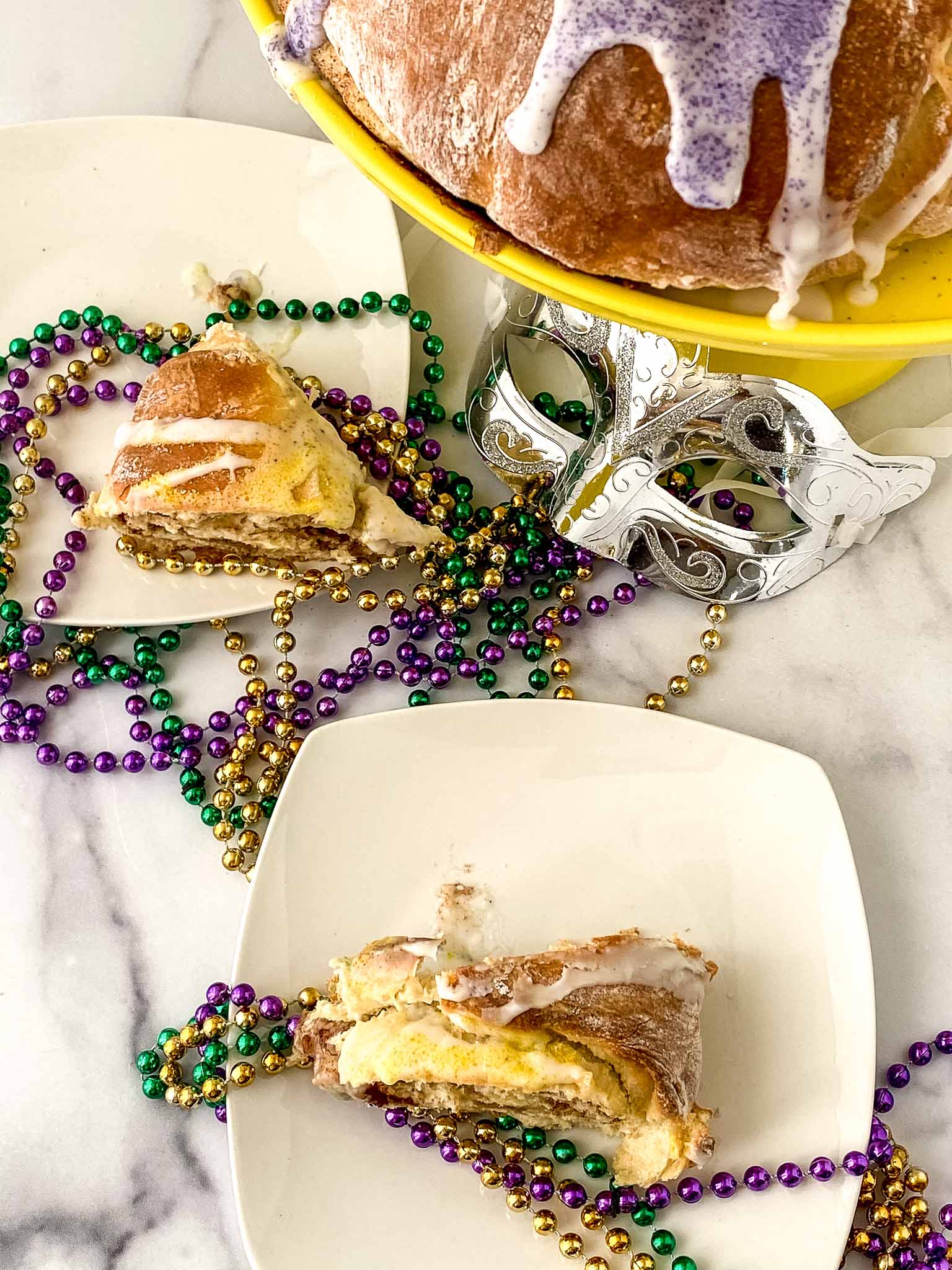
How Do You Make It?
Start by turning your oven to 200°F — you’ll use it as a warm proofing environment for the dough, not for baking. Take your eggs out of the refrigerator and drop them in a bowl of warm water for 5 minutes so they come up to room temperature before they go into the dough.
In a small bowl, combine the warm milk, yeast, and 1 tablespoon of granulated sugar. Stir gently and leave it alone for 5-10 minutes. You’re waiting for it to get foamy and bubbly — that foam is the yeast activating and it’s how you know the dough will actually rise. If after 10 minutes nothing has happened, your yeast is dead or the milk was the wrong temperature. Don’t try to push through — throw it out and start over with fresh yeast. There’s no fixing inactive yeast once it’s in the dough.
Pour the foamy yeast mixture, your now-room-temperature eggs, and the melted butter into the bottom of your stand mixer bowl. Mix until combined. Add the flour, the remaining ¼ cup of granulated sugar, and the salt. Start with the paddle attachment to bring it together, then switch to the dough hook and knead for 5-7 minutes. The dough should come out smooth and slightly tacky — it’ll stick to your fingers a little but shouldn’t be wet or sloppy.
Pour 2 teaspoons of olive oil into a large bowl and place the dough in it, turning to coat all sides in the oil. Cover the bowl with plastic wrap or a damp kitchen towel. Turn the oven off and place the covered bowl inside — the residual warmth is the ideal proofing environment. Leave it for 60 minutes until the dough has doubled in size.
While the dough is proofing, make the filling. Mix the softened butter, brown sugar, and cinnamon together until you have a smooth, spreadable paste. Chop your pecans if you’re using them and set everything aside.
When the 60 minutes are up, take the dough out of the oven and preheat it to 375°F. Punch the dough down on a lightly floured surface to release the air, then knead it for another 1-2 minutes.
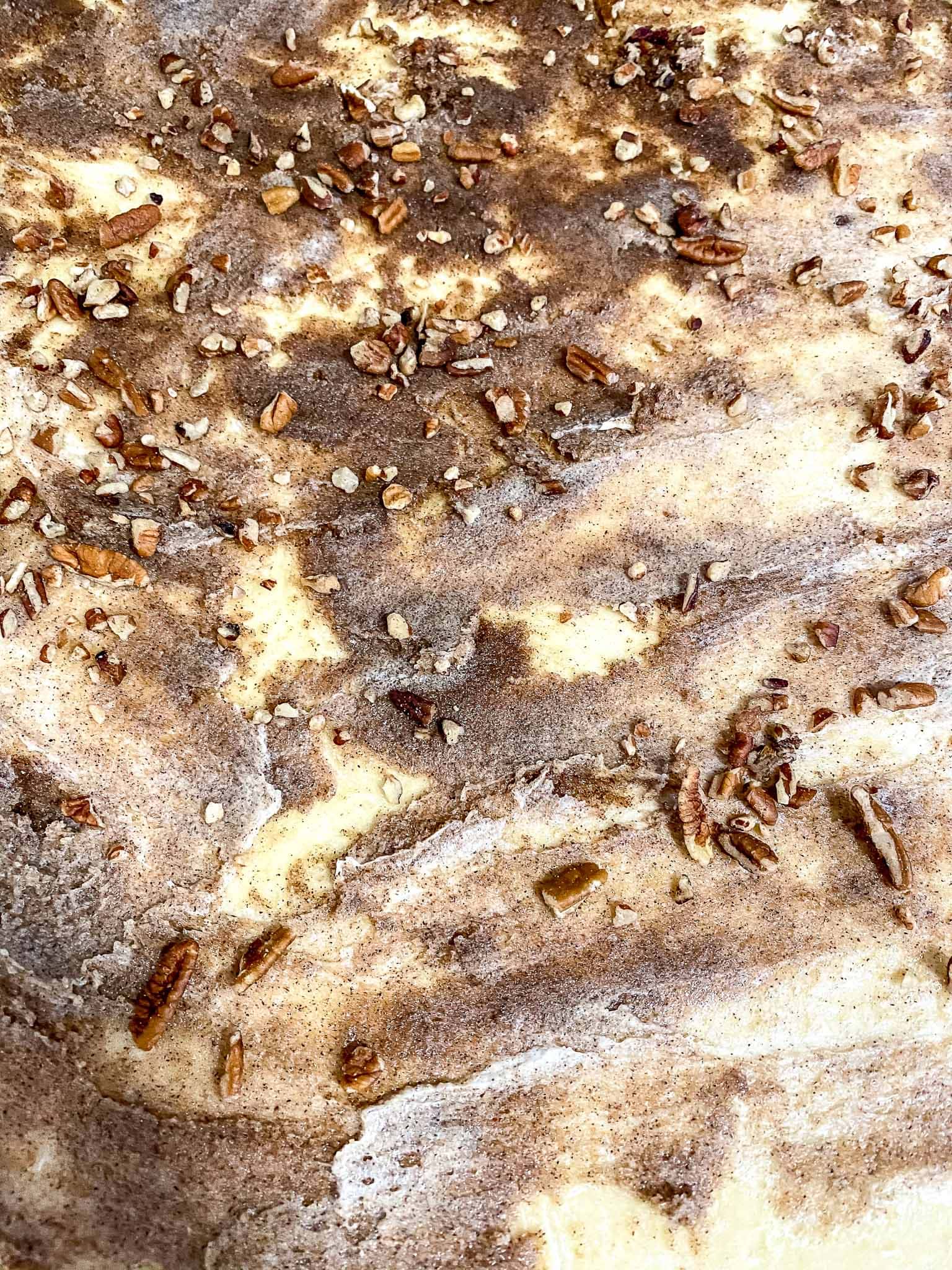
Roll the dough into a large rectangle — about 20 inches long. Spread the cinnamon-butter paste evenly across the whole surface, all the way to the edges. Scatter the pecans over the paste if using. Now roll the dough tightly from the long side into a log, using a bench scraper to help if it’s sticking to the surface.
At this point you can either leave the log as is for a smooth ring, or do the braid — cut the log almost in half lengthwise, leaving both ends connected, and twist the two strands over each other with the cut sides facing up before forming the ring. Either way, transfer it to a parchment-lined baking sheet and bring the two ends of the log together into a ring or oval shape, sealing the seam with a dab of water or milk pressed firmly together.
Cover the ring loosely with a clean towel and let it rise for another 60 minutes. When it’s ready to go in the oven, brush the entire surface with milk for a golden finish.
Bake at 375°F for 25-30 minutes until the cake is deeply golden brown all over. Pull it out and let it cool for 15-20 minutes before doing anything else — glazing a hot cake means the glaze runs off rather than coating it.
If you’re adding the plastic baby, cut a small slit into the inside of the ring now and slide it in before the glaze goes on.
Make the glaze by whisking the powdered sugar, milk, and vanilla together until smooth and thick but pourable — it should fall off a spoon in a slow, steady ribbon. Pour or drizzle it over the cooled cake. Then immediately — before the glaze sets — sprinkle alternating sections of purple, gold, and green sanding sugar around the ring. Work quickly because you have about 60 seconds before the surface starts to firm up and the sugar won’t adhere as well.
Let the glaze set completely before slicing and serving.
This recipe doesn’t have a plastic baby inside but it has everything else including the delicious flavors and of course the colors!
Although tradition says that finding the baby in your cake symbolizes luck and prosperity, and the finder becomes the ‘king’ or ‘queen’ of the evening. That is just so awesome!

When should I make and serve this amazing King Cake?
You can have it on Fat Tuesday, or anytime around Mardi Gras. But if you are feeling extra nostalgic feel free to make this king cake anytime.
The Colors — What Purple, Gold, and Green Mean
The three sanding sugars aren’t just decoration. Each color in the traditional Mardi Gras palette carries a specific meaning that goes back to the 1872 Rex parade in New Orleans, where the colors were officially established: purple represents justice, gold represents power, and green represents faith. Together they make up the signature visual identity of Mardi Gras and, by extension, of King Cake.
When you decorate the cake, apply the three colors in alternating sections around the ring rather than mixing them — each color gets its own distinct band so all three are clearly visible and the pattern reads as intentional rather than random. The traditional order is purple, gold, green, repeated around the ring, though most people arrange it however looks right to them. The glaze sets quickly once poured, so have your sugars measured and within reach before the glaze goes on — you have about 60 seconds of working time before the surface starts to firm.
The Braiding Technique — Smooth Ring vs. Traditional Braid
The recipe as written produces a smooth ring — the filled dough rolled into a log, then formed into a circle with the ends pressed together. That works and looks good. But if you want the braided visual that looks more like a traditional New Orleans King Cake, there’s one extra step after rolling the log.
Once you have your filled log, use a sharp knife or bench scraper to cut it almost in half lengthwise — starting about an inch from one end and stopping about an inch from the other, so the two ends stay connected.
You’ll have two strands joined at both ends. Twist those two strands over each other, keeping the cut sides facing up so the cinnamon filling is visible through the braid, then bring the two joined ends together to form the ring and press to seal. The result is a rope-like braid all the way around the ring with the filling showing through every twist.
It takes an extra minute and makes the cake look significantly more like the real thing. Either version tastes the same — the braid is entirely about the visual. If this is your first time making King Cake, make the smooth ring and get comfortable with the dough before trying the braid on the next batch.
FAQs
The baby hidden inside the King Cake is a New Orleans tradition — whoever gets the slice with the baby is crowned “king” or “queen” for the evening and traditionally has to host the next party or buy next year’s King Cake. The baby usually represents luck and prosperity. This recipe doesn’t include one, but you can buy food-safe plastic babies online and add one by cutting a small slit in the inside of the ring before serving.
The traditional Mardi Gras colors each have meaning: purple represents justice, gold represents power, and green represents faith. Together they make up the signature King Cake appearance.
Yes — bake the cake and let it cool completely, then wrap tightly and store at room temperature for up to 2 days. Add the glaze and sanding sugar on the day you plan to serve it for the freshest appearance.
If after 10 minutes the yeast mixture shows no bubbles or foam, the yeast is dead or the milk was the wrong temperature. Don’t continue — the dough won’t rise. Start over with fresh yeast and milk at the correct temperature (warm but not hot — about 110°F).
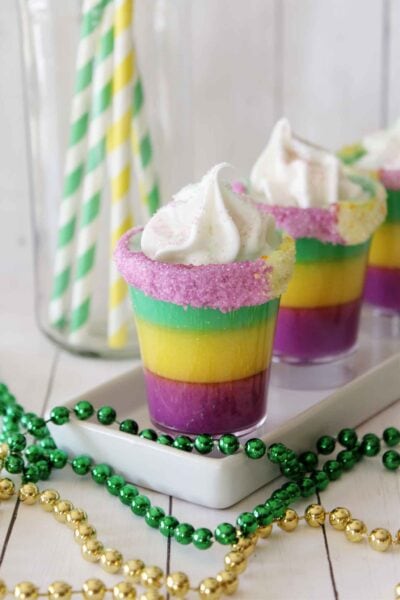
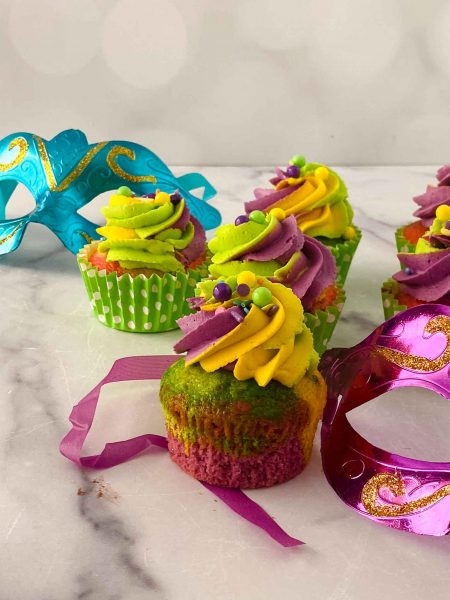
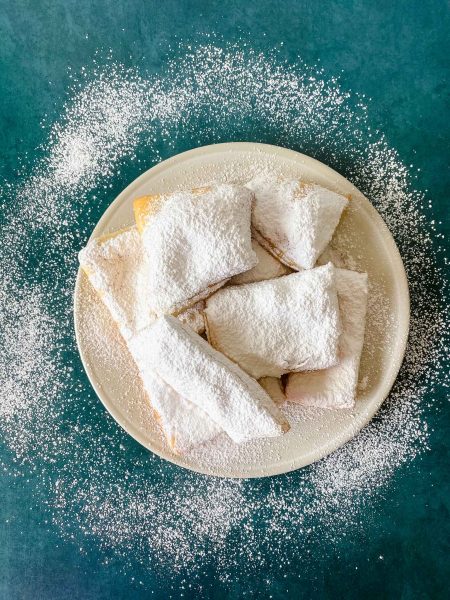
Here are some more amazing Mardi Gras recipes to try:
Amazing Mardi Gras King Cake Recipe
This amazing Mardi Gras king cake is full of flavor and perfect for Fat Tuesday and other Mardi Gras celebrations!
Ingredients
- For the dough:
- 1 cup warm milk
- 1 packet instant rise yeast
- 1⁄4 cup melted butter
- 1⁄4 cup granulated sugar + 1tbsp separated 2 large eggs
- 1⁄2 tsp salt
- 4 cup all purpose flour
- 2 tsp olive oil
- For the filling:
- 2/3 cup brown sugar
- 2 teaspoon cinnamon
- 6 tablespoons softened unsalted butter 1⁄2 cup chopped pecans
- For the icing:
- 1.5 cup powdered sugar 1.5 tablespoons milk
- 1⁄2 tsp vanilla
Instructions
- Turn your oven to 200°F to create a warm environment for proofing later. Remove eggs from fridge and place in a bowl of warm water for 5 minutes to bring to room temperature.
- Add warm milk, yeast, and 1 tablespoon of granulated sugar to a bowl. Stir gently and let sit 5-10 minutes until foamy and bubbly. If nothing happens after 10 minutes, the yeast is dead — start over with a fresh packet.
- Pour the foamy yeast mixture, eggs, and melted butter into the bottom of a stand mixer bowl. Mix until combined.
- Add the flour, remaining ¼ cup granulated sugar, and salt. Mix with the paddle attachment until incorporated, then switch to the dough hook and knead for 5-7 minutes until the dough is smooth and slightly tacky but not sticky.
- Pour 2 teaspoons of olive oil into a large bowl. Place the dough in the bowl, turning to coat it in the oil. Cover with plastic wrap or a damp towel.
- Turn off the oven. Place the covered bowl inside the warm oven and proof for 60 minutes until doubled in size.
- While the dough proofs, make the filling: mix the softened butter, brown sugar, and cinnamon together until it forms a smooth paste. Set aside. Chop pecans if using.
- Remove the dough from the oven. Preheat the oven to 375°F. Punch the dough down on a lightly floured surface and knead for 1-2 minutes.
- Roll the dough into a large rectangle, approximately 20 inches long.
- Spread the cinnamon-butter paste evenly across the dough. Sprinkle chopped pecans over the paste if using.
- Roll the dough tightly from the long side into a log, using a bench scraper if it sticks to the surface.
- Transfer to a parchment-lined baking sheet. Bring the two ends of the log together to form a ring or oval, sealing the seam with a dab of water or milk.
- Cover loosely and let rise for 60 minutes. Brush with milk before baking.
- Bake at 375°F for 25-30 minutes until golden brown.
- Cool for 15-20 minutes. If adding a plastic baby, cut a small slit in the inside of the ring and slide it in.
- Make the glaze: whisk together powdered sugar, milk, and vanilla until smooth and thick but pourable.
- Drizzle glaze over the cake. Immediately sprinkle with alternating sections of purple, gold, and green sanding sugar before the glaze sets.
Before you go, Grab Your Free Printable Recipe Kit!
Keep track of all your favorite recipes and ingredients with this free printable book!

Hi! I’m Nellie. I am an entrepreneur, a busy mama of 3 and a wife to my high school sweetheart. I have been sharing content for over 12 years about how to cook easy recipes, workout tips and free printables that make life a little bit easier. I have been featured in places like Yahoo, Buzzfeed, What To Expect, Mediavine, Niche Pursuits, HuffPost, BabyCenter, Mom 2.0, Mommy Nearest, Parade, Care.com, and more!
Get comfortable and be sure to come hang out with me on social. Don’t forget to grab your free fitness journal before you go!
